Could Someone Be Sending Emails Pretending to Be Your Business?
Most Business Owners Don't Realise It's Possible
Imagine one of your customers receives an email that appears to come from your company. It uses your business name, your email address, and looks completely genuine.
The email asks them to pay an invoice, update banking details, or click a link. The problem?
You never sent it.
Cyber criminals regularly send fake emails while pretending to be legitimate businesses. This is known as email spoofing, and it is one of the most common ways criminals carry out fraud, steal information, and damage business reputations. The good news is that there is a way to significantly reduce this risk.
It’s called DMARC.
What is DMARC?
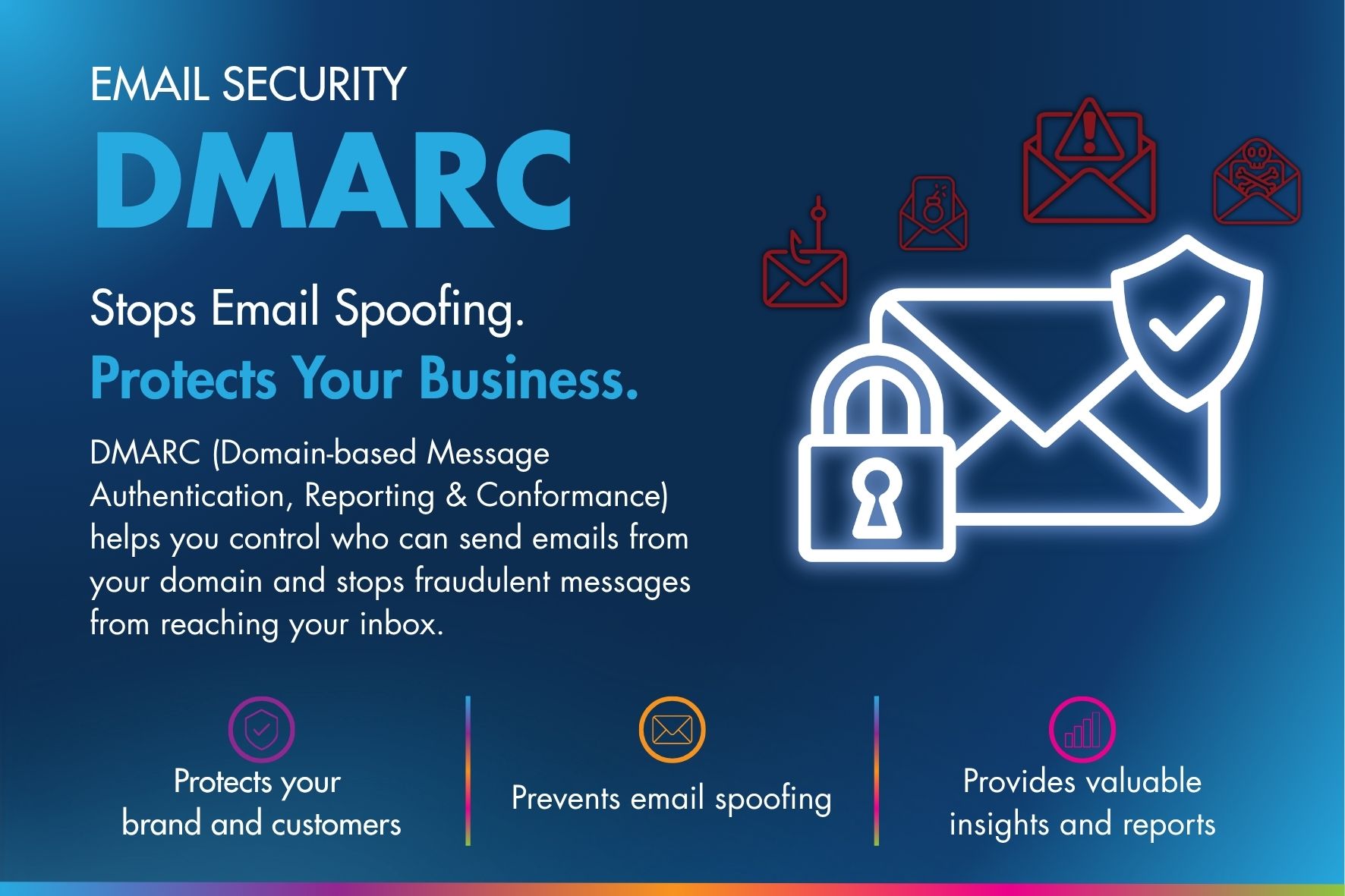
Think of DMARC as a security guard for your business email.
It helps protect your company’s name and reputation by making it much harder for criminals to send emails pretending to be you.
Without DMARC in place, anyone can attempt to use your domain name to send fraudulent emails to your customers, suppliers, and employees.
With DMARC enabled, receiving email systems can identify suspicious messages and block them before they reach the recipient.
Why Should Business Owners Care?
Most cyber-attacks don’t start with sophisticated hacking.
They start with an email.
Even if your business has never been targeted, your domain could still be used by criminals without your knowledge.
Many organisations only discover the problem after a customer report receiving a suspicious message.
A fake email can be used to:
Trick customers into making payments
Steal passwords and personal information
Distribute malware
Damage your company’s reputation
Cause loss of trust with clients and suppliers
Your Reputation is One of Your Most Valuable Assets
Every email your business sends helps build trust. But if criminals can impersonate your organisation, that trust can quickly be damaged.
DMARC helps protect:
Your company name
Your customers
Your employees
Your suppliers
Your brand reputation
Your ability to deliver emails successfully
“Highly recommended!”
“I’ve been using Amshire Solutions Ltd to provide IT support within my business for a couple of years now and have been delighted with their level of service and professionalism….highly recommended!”
Tracey O'Brien
Happy Customer
Simply Turning DMARC On Isn’t Enough
Many organisations either don’t have DMARC enabled or have only partially set it up.
Even when it is enabled, it should be regularly checked and monitored.
Why?
Because businesses often use multiple systems to send email, for example:
Microsoft 365
CRM systems
Marketing platforms
Accounting software
Website contact forms
Booking or ticketing systems
As your business changes, your email security settings need to keep up.
Regular monitoring helps identify issues, uncover unauthorised activity, and ensure your protection remains effective.
The Question Every Business Should Ask
If someone tried to send an email pretending to be your company today, would it be stopped?
Most business owners don’t know the answer.
That’s why a DMARC assessment can be so valuable.
Free DMARC Security Check
We offer a complimentary review of your business domain to help you understand how well protected your email identity really is.
Our assessment includes:
A DMARC health score
An email security review
Identification of potential risks
Recommendations for improvement
A simple, easy-to-understand report
No technical jargon.
No obligation.
Just clear advice to help protect your business.
Request Your Free DMARC Report
Complete the form, and we’ll provide a personalised DMARC assessment for your organisation. We’ll review your domain and send you a straightforward report showing how well your business is protected, along with practical recommendations to improve it.
Protect Your Reputation Before Someone Else Uses It
Most businesses invest in locks for their doors, alarms for their buildings, and antivirus for their computers.
DMARC helps protect something just as important: your business identity.
If you’re unsure whether your domain is properly protected, request your free DMARC report today and discover how secure your business really is.