
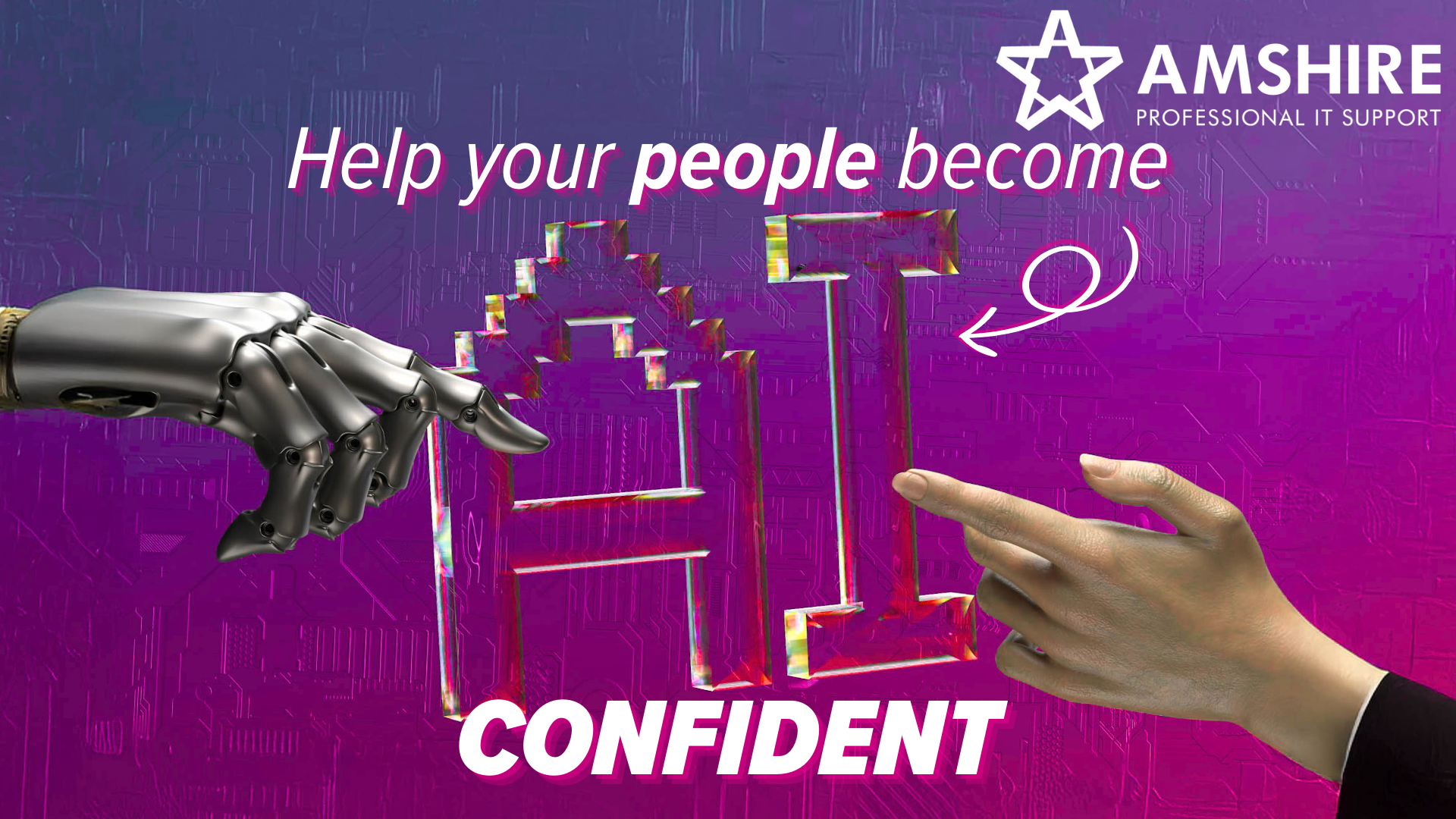
How to Help Your People Become AI Confident
Understanding how your team feels about AI
The importance of AI confidence is growing daily with its’ adoption continuing to grow rapidly, but not everyone feels equally as confident with it. Some employees embrace it with enthusiasm, while others feel unsure about how it fits into their role.
A mix of excitement and hesitation
Many people enjoy the time-saving benefits of AI. Tools that summarise documents, draft reports or support decision making can make daily work much easier.
At the same time, AI still feels unfamiliar to many team members. They worry about accuracy or question when to trust the tool. This combination of excitement and uncertainty often stops them from using AI consistently.
What current research reveals
A recent workplace study shows how quickly AI use has grown.
- Four in five employees now use at least one AI tool.
- More than half use AI assistants regularly to speed up tasks or streamline admin.
However, AI confidence and comfort levels vary due to people learning at different speeds and having different levels of support.
This variation creates inconsistent workflows, uneven productivity and knowledge gaps within teams.
The AI confidence gap
Why employees feel unsure
Even when people want to use AI, they hesitate because of workplace perceptions.
- Some fear colleagues will see AI as a shortcut.
- Some think managers will question their effort.
- Others worry that if AI produces incorrect output, their judgement will be blamed.
These concerns prevent employees from exploring features, testing ideas or learning new capabilities.
A lack of training leaves people to figure it out alone.
Most organisations introduce AI tools without structured learning.
- Only one in three employees has received any formal training.
- Many use AI without understanding prompt writing, data privacy expectations or best practices.
- This results in trial and error, which often leads to errors, frustration and distrust in the tool.
This hurts productivity and increases the risk of incorrect results.
Managers and junior staff experience AI differently.
Around seventy per cent of managers say they feel confident using AI. They often have more exposure, more autonomy and more experience with decision-making tools.
Only about a third of junior staff feel confident. Many feel unsure about what they are allowed to use AI for or how to apply it responsibly.
This knowledge gap slows collaboration and reduces overall team performance.
Why AI confidence matters for your business
AI improves quality, speed and accuracy.
When people know how to use AI properly, they complete tasks faster and with fewer errors.
AI supports tasks like research, analysis, documentation, reporting, scheduling and customer communication.
Employees gain more time for strategic work that drives revenue and growth.
Confident teams innovate more
Teams that trust AI feel more comfortable testing ideas, experimenting with new processes and improving outdated workflows.
Confidence leads to stronger decision-making because employees use AI to expand insight rather than replace thinking.
This creates a culture of continuous improvement.
AI reduces burnout when used effectively.
AI takes pressure off employees by handling repetitive and time-consuming tasks.
When people feel confident using it, they reduce overtime, cut manual work and maintain healthier workloads.
How leaders can build an AI-confident culture
Create a safe learning environment.
Leaders shape how employees feel about AI. When people feel safe to experiment, they learn faster.
Here are some things you can do to help create healthier environments:
- Invite open conversation about what works and what does not.
- Reassure people that learning AI takes time.
- Remove any judgement connected to mistakes or early attempts.
Position AI as a tool that strengthens performance
It’s important for you to explain that AI is not a replacement for effort or expertise. It supports accuracy, improves consistency and frees employees to focus on tasks that require skill and insight. Encouraging this mindset helps reduce fear and encourages adoption.
Provide clear and practical training.
Training gives employees the knowledge they need to use AI responsibly and confidently.
- Offer structured sessions covering prompt writing, data security, verification steps and tool capabilities.
- Run internal workshops where people practise skills with guidance.
- Create short show and tell sessions so team members share real examples that others can learn from.
- Give employees access to simple resources they can refer to at any time.
Set clear rules and expectations.
People feel more AI confident when they understand the boundaries.
It’s important that you explain what tasks AI can support, clarify what requires human oversight, and outline how to verify responses and protect business data.
Clear expectations remove confusion and build trust.
The long-term benefits of AI-confident teams
Confidence improves over time.
With regular practice, thoughtful leadership and the right support, employees gain genuine confidence using AI.
They develop stronger judgement, faster workflows and better problem-solving skills.
A confident team strengthens business resilience.
When your team understands and has more AI confidence, your organisation adapts faster to new challenges and opportunities.
You gain greater efficiency across departments, see higher quality output and build a future-ready workforce that can evolve with technology rather than feel intimidated by it.
AI will continue to transform the workplace. When your people feel informed, supported and confident, your business gains long-term advantage.
Feel unsure, concerned or have any question?
Please don’t hesitate to get in contact with us today so we can put your mind at ease.